
Select Sections to Print
×Book Details
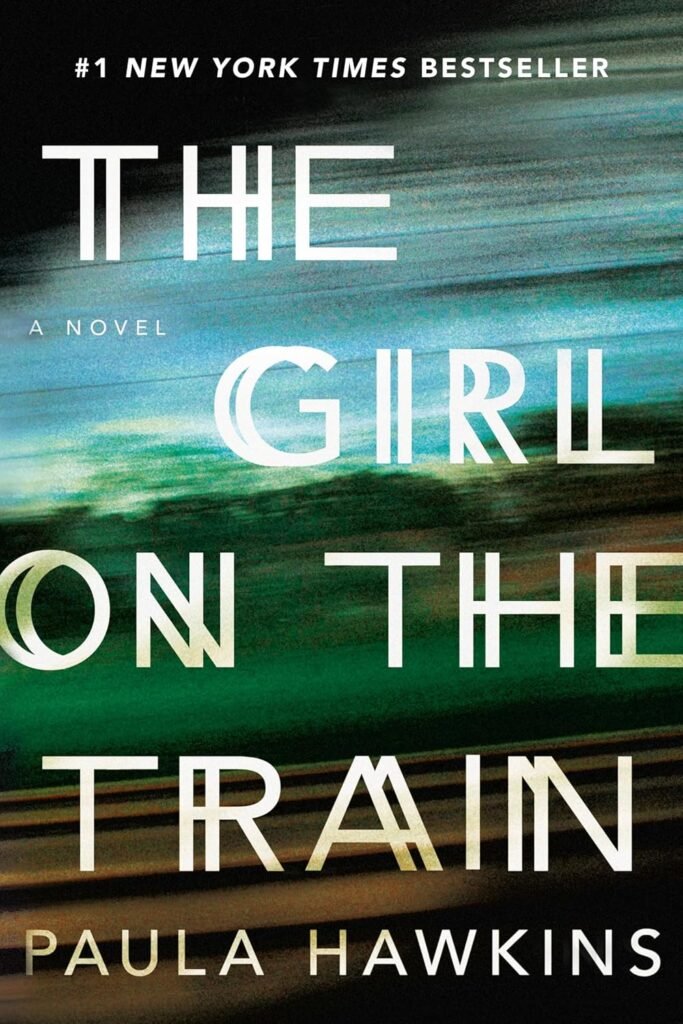
The Girl on the Train
Jump to Section
⚠️ Trigger Warnings
- Alcohol Abuse / Addiction
- Emotional Abuse / Gaslighting
- Domestic Violence
- Graphic Violence
- Mental Health (Anxiety, Depression)
- Child Loss
- Infertility
- Abortion
- Infidelity
- Kidnapping / Child Endangerment
⏱️ 2-Minute Spoiler Summary
The Girl on the Train follows three women—Rachel Watson, Megan Hipwell, and Anna Watson—whose lives become dangerously intertwined through lies, addiction, and manipulation.
Rachel Watson, an unemployed alcoholic, spends her days riding the train past her ex-husband Tom Watson’s house, obsessively watching his new life with his wife Anna and their baby. To escape her own reality, she fantasizes about a seemingly perfect couple nearby—Megan and Scott Hipwell—until she witnesses Megan kissing another man, shattering the illusion.
Shortly after, Megan goes missing. That same night, Rachel blacks out during a drunken episode, leaving her unsure if she was involved. Determined to uncover the truth, she inserts herself into the investigation, even as her unreliable memory—and Tom’s long history of manipulation—make her question everything she thinks she knows.
Through alternating timelines, Megan’s story reveals a troubled past, a volatile marriage, and a secret affair—with Tom Watson. When she becomes pregnant and refuses his demand for an abortion, Tom murders her to protect his carefully constructed life.
As Rachel slowly recovers her suppressed memories, she realizes Tom has been gaslighting her for years, planting false narratives during her blackouts to control her. When she confronts Anna with the truth, Anna initially defends Tom—until she uncovers evidence of his affair with Megan.
In a violent climax, Tom attacks Rachel, but she kills him in self-defense with Anna’s help. The truth finally comes to light: Tom was Megan’s killer all along.
The novel ends with Rachel sober and beginning to reclaim her life, no longer trapped by the lies that once defined her.
📖 Full Spoiler Summary
The Illusion from the Train Window
Every morning, Rachel Watson rides the same commuter train into London, watching the same stretch of suburban homes slide past her window. She fixates on one particular house—a couple she nicknames “Jess and Jason.” To Rachel, they are perfect: attractive, affectionate, untouched by the kind of damage that has unraveled her own life.
In reality, Rachel is barely holding it together. Recently divorced from her ex-husband Tom, unemployed due to her alcoholism, and spiraling, she continues taking the train just to maintain the illusion of normalcy. Tom now lives in their old home with his new wife, Anna, and their baby—just a few doors down from the couple Rachel watches.
The fantasy sustains her—until one morning, everything changes.
The First Crack in Perfection
From the train, Rachel sees “Jess” (Megan Hipwell) kissing a man who is not her husband.
The image shatters Rachel’s carefully constructed narrative. The perfect couple isn’t perfect at all.
That night, already fragile, Rachel drinks heavily. Drawn by obsession and a need to do something, she gets off the train near her old neighborhood. Her memories blur. There’s anger. There’s confrontation. There’s blood.
And then—nothing.
By morning, Megan is missing.
A Woman Who Can’t Trust Her Own Mind
News of Megan Hipwell’s disappearance spreads quickly. Rachel becomes consumed with the case, convinced she holds a crucial piece of the puzzle—but her blackout has erased the night’s events.
Fragments surface: a flash of Megan, a sense of violence, the lingering certainty that she was there.
At the same time, Rachel’s past with Tom resurfaces in painful detail. During their marriage, her drinking escalated after learning she was infertile. Tom repeatedly told her she became volatile and abusive during blackouts—stories Rachel accepted as truth.
Now, she begins to question everything.
What if she didn’t do what Tom said she did?
What if her memories—and her guilt—were never entirely her own?
Megan Before the Disappearance
A year earlier, Megan Hipwell’s life is already unraveling behind closed doors.
Restless and emotionally fractured, she works as a nanny for Tom and Anna while trapped in a suffocating marriage to her husband, Scott. Beneath her composed exterior lies a history of trauma: the accidental death of her infant daughter, the loss of her brother, and a pattern of self-destructive choices.
Megan begins an affair—with Tom.
What starts as secrecy turns into something more dangerous when she becomes pregnant. Unlike before, Megan wants to keep the child. She sees it as a second chance.
Tom sees it as a threat.
False Leads and Shifting Suspicions
In the present, suspicion circles around the men in Megan’s life.
Rachel inserts herself into the investigation, contacting Scott and revealing that she saw Megan kissing another man—her therapist, Dr. Kamal Abdic. The revelation redirects suspicion toward Kamal, whose professional boundary with Megan appears questionable.
Rachel’s involvement escalates. She and Scott form an uneasy alliance fueled by grief and alcohol, culminating in a volatile night together. But when Scott realizes Rachel lied about knowing Megan, his grief turns to rage, and Rachel is pushed out once again—isolated and unreliable.
Meanwhile, Anna grows increasingly paranoid. Rachel’s continued presence near their home unsettles her, and she begins to suspect that Rachel may be capable of violence—or worse, that Tom is hiding something.
The Truth Beneath the Blackout
Rachel becomes determined to reclaim her missing memories.
Through persistence—revisiting locations, piecing together conversations, and confronting her past—something begins to surface. Not just fragments of the night Megan disappeared, but a deeper truth about her marriage.
Tom lied.
For years, he manipulated Rachel during her blackouts, convincing her she had done things she hadn’t—violence, cruelty, humiliation. He controlled the narrative, shaping her self-perception until she no longer trusted herself.
And then the final memory breaks through:
The night Megan died, Rachel saw Tom with her.
He struck Megan. He got into the car with her.
Tom was there.
Megan’s Final Hours
The truth of Megan’s fate unfolds.
After discovering her pregnancy, Megan refuses Tom’s demand for an abortion. She wants to keep the baby—to reclaim something she lost long ago.
Tom refuses to let his life unravel.
When Megan pushes back, threatens exposure, and refuses to disappear quietly, Tom kills her—stabbing her in a moment of cold, controlled rage.
Then he returns home to Anna, carrying on as if nothing happened.
The Confrontation
Armed with the truth, Rachel goes to Anna.
At first, Anna refuses to believe her. Tom is holding their child, calm and convincing, slipping seamlessly into the role of protector and victim. Rachel, with her history of instability, is easy to dismiss.
But then Anna finds Megan’s phone hidden in Tom’s belongings.
The illusion collapses.
When Rachel confronts Tom directly, he drops the mask. The charm disappears, replaced by the same calculated violence that killed Megan. He attacks Rachel, attempting to silence her permanently.
Power Shifts—and the Final Blow
In a desperate act of self-defense, Rachel grabs a corkscrew and drives it into Tom’s neck.
Even then, it isn’t enough.
Anna—now fully aware of who Tom really is—makes a choice. She takes control of the moment, forcing the corkscrew deeper, ensuring he cannot survive.
For the first time, the power shifts away from Tom completely.
Aftermath: Reclaiming Reality
The investigation closes with the truth finally exposed: Tom Watson is Megan Hipwell’s killer.
Rachel is cleared of suspicion.
More importantly, she is no longer trapped inside the version of herself Tom created. With sobriety and clarity, she begins to rebuild—her memory intact, her agency restored.
In the final moments, Rachel boards a train once more—but this time, she is not watching someone else’s life.
She is moving forward into her own.
🔚 Ending Explained
The ending of The Girl on the Train brings together two key threads:
- who killed Megan Hipwell, and
- what was really happening inside Rachel’s “missing” memories.
Once both are resolved, the entire story becomes much clearer.
Tom as the Killer — Motive and Method
The novel ultimately reveals that Tom Watson killed Megan Hipwell.
The motive is tied directly to exposure and control. Megan tells Tom she is pregnant and that the child is likely his. At that point, Tom is already living a double life—married to Anna, raising a child, and maintaining the image of stability. Megan’s pregnancy threatens to expose the affair and disrupt that life.
Tom’s response follows a consistent pattern seen throughout the book: when control is threatened, he removes the threat.
He takes Megan to Corly Wood under the pretense of talking. When she refuses to comply with his demand to get an abortion—and implies she may reveal the truth—he kills her. He then buries the body himself and immediately begins managing the narrative, calling Anna to create an alibi and redirect suspicion toward Rachel.
This aligns with how Tom operates across the novel: he lies quickly, confidently, and in ways that exploit what others already believe.
Rachel’s Memory — What Actually Happened That Night
Rachel’s recovered memory is the second major piece of the ending.
Earlier in the story, Rachel believes she saw Anna getting into a car and assumes her own injuries came from a drunken fall. Both of these beliefs are incorrect.
What she actually witnessed was Megan getting into Tom’s car.
Additionally, her head injury was not accidental. Tom assaulted her in the underpass because she was intoxicated, loud, and close enough to notice something was wrong. He needed to silence her and prevent her from interfering.
This connects to a broader pattern: Tom has spent years gaslighting Rachel, using her alcohol-induced blackouts to reshape events. He repeatedly told her she behaved violently during those blackouts, which led her to distrust her own memory and accept his version of events without question.
The ending clarifies that Rachel’s unreliability was not just due to alcohol—it was actively reinforced by Tom.
The Confrontation — How the Truth Comes Out
The final confrontation at the house on Blenheim Road serves as the moment where all perspectives align.
Rachel goes to warn Anna about Tom. Initially, Anna resists, largely because Rachel’s history makes her seem unreliable. However, physical evidence—particularly Megan’s phone—undermines Tom’s version of events.
When confronted, Tom attempts to regain control through explanation and deflection, but when that fails, he turns to physical violence. This is significant because it removes any ambiguity about his behavior—his abuse is no longer hidden or filtered through Rachel’s memory.
Rachel attempts to call the police, and Tom attacks her to stop her.
Tom’s Death — Why Both Women Are Involved
During the struggle, Rachel stabs Tom in the neck with a corkscrew. This act is clearly self-defense—she is responding to an immediate physical threat.
Anna’s role comes immediately after. When she sees Tom injured but still alive, she makes the decision to ensure he dies by pushing the corkscrew further.
This moment reflects a shift in understanding. Anna, who had previously believed Tom’s version of events, now recognizes the pattern of deception and violence. Her action ensures that Tom cannot continue to manipulate or harm either of them.
Legal Outcome — Why Rachel Is Cleared
After Tom’s death, Rachel and Anna present a consistent account: Tom attacked Rachel, and she defended herself.
This explanation is supported by the physical evidence and by Tom’s connection to Megan’s disappearance. With Megan’s murder now explained and Tom identified as the killer, the police accept that Rachel acted in self-defense.
As a result, Rachel faces no legal consequences.
Revelations About Tom — A Pattern of Deception
Following his death, further details emerge about Tom’s past.
He fabricated aspects of his identity, including his career and personal history, and had a pattern of financial dishonesty. These details reinforce that Megan’s murder was not an isolated incident of poor judgment, but part of a broader pattern of manipulation and deception.
Final Outcomes for the Characters
- Rachel: Gains clarity about her past, achieves sobriety, and leaves the area. Her arc resolves with regained control over her memory and identity.
- Anna: Leaves the house and the life she built with Tom. While no longer under his influence, she remains connected to the events through her role in his death.
- Megan: Is properly buried, and the truth about her death is established.
What the Ending Clarifies
The ending ultimately resolves the novel’s central uncertainties:
- Megan’s disappearance was not random—it was the result of Tom protecting his double life.
- Rachel’s “unreliability” was partially constructed through long-term manipulation.
- The shifting suspicions throughout the novel (Scott, Kamal, Rachel) are shown to be misdirection created by incomplete information and Tom’s interference.
Once Rachel’s memory returns and Tom is exposed, the fragmented narrative becomes consistent, and the events of the novel can be understood as a single, coherent sequence.
👤 Characters & Fates
🔶 Main Characters






🔷 Supporting Characters

🕳️ Potential Plot Holes
Tom kills Megan on July 13 and plans to plant her phone to frame Scott. Yet the phone remains hidden in his gym bag until August 17—over a month later.
Given that:
●Megan’s body has already been discovered
●The investigation is well underway
●Tom is actively trying to avoid suspicion
It’s difficult to justify why he would keep such critical evidence in an easily discoverable place for so long.
Megan’s body is found in poor condition after prolonged exposure and submersion. Despite this, DNA results identifying the baby’s paternity are reportedly available within about two weeks.
In reality, extracting and processing usable DNA from a decomposed, water-damaged fetus in that timeframe would be highly unlikely, making the speed of results feel unrealistic.
Tom is later revealed to have never served in the army, despite frequently claiming to meet “army friends.”
This raises a gap:
●Who was he actually meeting?
●How did he maintain this lie for years without Anna questioning it or ever meeting these people?
The logistics of sustaining this fabricated social life are never fully explained.
On the same night:
●Tom violently attacks Rachel, leaving her visibly injured
●Murders Megan
●Buries her body by hand
He then returns home and interacts with Anna, who is already described as suspicious and observant.
It’s a stretch that:
●She doesn’t notice blood, dirt, or physical signs of the attack
●His condition doesn’t raise immediate alarm
The physical aftermath of the night doesn’t align with how easily he blends back into normalcy.
Rachel and Anna claim Tom’s death was self-defense after Rachel stabbed him with a corkscrew.
However:
●Rachel notes that Anna later twists the corkscrew further to ensure his death
●This suggests a second, deliberate action rather than a single defensive strike
A forensic examination would likely detect this, potentially contradicting their version of events.
Rachel is found with a serious head wound the same night Megan disappears, consistent with being struck by something sharp.
At the same time:
●Megan dies from head trauma
●Rachel was in the same area
Despite this, police dismiss Rachel as unreliable and fail to seriously connect her injury to the case early on, which feels like a significant investigative oversight.
📚 Book Club Q&A's
⭐ Final Rating & Thoughts
This book absolutely earns its reputation as a foundational psychological thriller. It’s messy, uncomfortable, and honestly kind of bleak—but that’s exactly why it works.
Rachel is not a “likable” protagonist in the traditional sense, and I think that’s the point. You’re not supposed to admire her—you’re supposed to sit in her confusion, her self-doubt, and her unraveling sense of reality. And that makes the payoff hit harder.
That said, it’s not perfect. The middle drags a bit, and there were moments where I wanted to shake Rachel and tell her to get it together. But even that frustration keeps you invested.
✨ Adaptation description
The Girl on the Train (2016) is a psychological thriller directed by Tate Taylor and written by Erin Cressida Wilson. The film is based on the bestselling 2015 novel by Paula Hawkins.
The movie features a strong ensemble cast led by Emily Blunt, alongside Rebecca Ferguson, Haley Bennett, Justin Theroux, Luke Evans, Allison Janney, Édgar Ramírez, and Lisa Kudrow.
🎥 Book vs. Movie: Key Differences in The Girl on the Train
While the film follows the same core mystery as the novel, several important changes affect the tone, characters, and overall impact of the story.
1. Setting: London → New York
One of the most noticeable changes is the location shift. The novel is set in suburban London, while the film moves the story to New York City.
This isn’t just cosmetic—it subtly alters the atmosphere. The book’s bleak, gray British suburbs contribute to its mood of isolation, while the film presents a more polished, upscale environment.
2. Rachel Feels More “Hollywood”
In the book, Rachel is deeply messy—physically, emotionally, and socially. The film softens this slightly, largely due to casting Emily Blunt, who naturally brings more sympathy and polish to the role.
Her alcoholism is still central, but the portrayal is a bit more controlled and visually stylized compared to the raw, uncomfortable depiction in the book.
3. A More Direct, Less Ambiguous Narrative
The novel leans heavily on confusion, memory gaps, and shifting timelines. The film simplifies this.
To make Rachel’s realization more cinematic, the movie introduces a new character—Martha (played by Lisa Kudrow)—who helps trigger Rachel’s memory recovery. This replaces the book’s much subtler “she suddenly remembers” moment.
4. New and Altered Characters
Several characters are changed or expanded:
- Detective Riley is gender-swapped (male in the book, female in the film)
- Cathy (Rachel’s roommate) is more assertive and involved
- Martha is entirely new and created to clarify plot points
These changes make the story easier to follow but reduce some of the book’s ambiguity.
5. Increased Focus on Megan’s Sexuality
The film leans more heavily into Megan’s relationships and sexuality, making them more explicit and visually present.
This reinforces the theme of “addiction” across characters—but shifts the tone from psychological introspection (book) to more external, visual storytelling (film).
6. Rachel’s Role in the Investigation Changes
In the book, Rachel chooses to insert herself into the mystery, almost obsessively.
In the film, she’s more directly pulled in by the police early on, making her involvement feel less self-driven and more reactive.
7. The Tone: Psychological Depth vs. Thriller Pacing
This is the biggest difference overall.
- Book: Slow, internal, heavily psychological
- Movie: Faster, more suspense-driven, more linear
The film prioritizes clarity and pacing, while the book thrives on discomfort, ambiguity, and unreliable narration.
8. The Ending: Same Outcome, Slightly Different Impact
The major plot outcome remains the same—Tom is killed with a corkscrew.
However, the film tones down some of the brutality and emotional complexity of the scene, making it more streamlined and less lingering than in the book.
💭 Final Takeaway
The movie is a more accessible, streamlined thriller, while the book is a messier, more psychologically immersive experience.
If the novel makes you feel Rachel’s confusion, the film helps you understand it—but at the cost of some depth and ambiguity.
✨ Books Like The Girl on the Train
See an error on this page?