
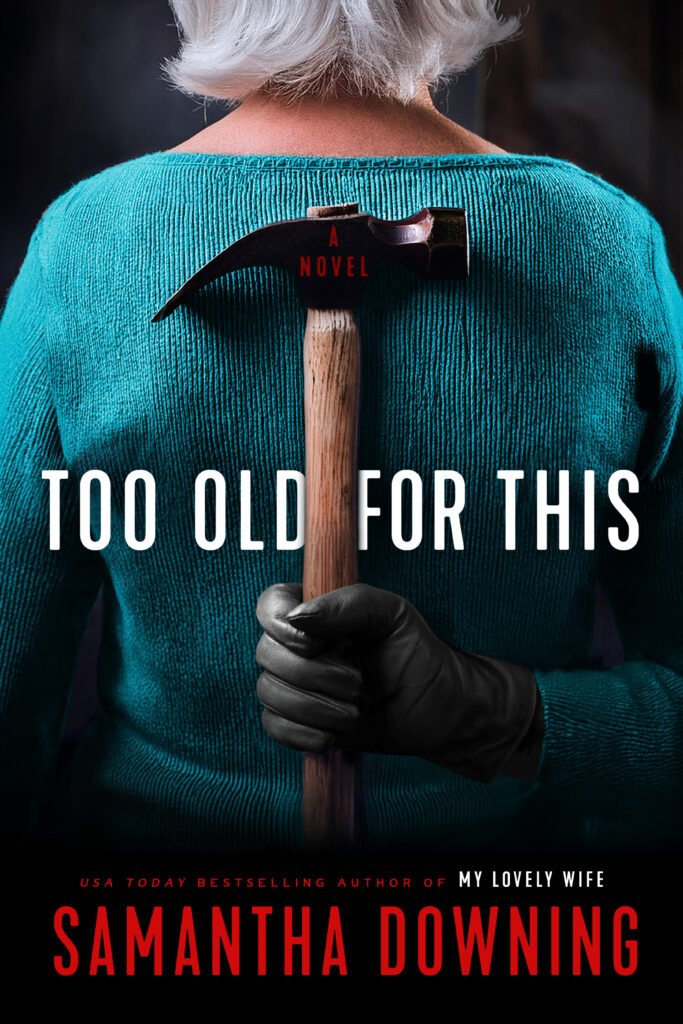
TOO OLD FOR THIS








⚠️ Trigger Warnings
●Graphic Violence and Murder
●Detailed Body Disposal (Dismemberment and Cremation)
●Blackmail and Extortion
●Kidnapping and Physical Restraint
●Drugging/Incapacitation
●Descriptions of Severe Injury and Blood
●Child Bullying and Psychological Abuse (related to family standing)
●Parental Abandonment
●Discussions of Aging, Frailty, and Mental Deterioration
●Explosions and Fire
●Implied Psychotic Break/Mental Instability
●Severed Human Remains (a finger)
📖 Spoiler TL;DR
Too Old For This — Quick Spoiler Summary
Lottie Jones, 75, is ready to settle into a quiet retirement—until her past starts catching up with her.
One by one, they come asking questions: a true-crime producer, a detective, a grieving mother… and finally, retired cop Kenneth Burke, who has suspected Lottie of being a serial killer for the past forty years.
Bodies pile up. Lottie handles each “problem” with the efficiency of someone who’s done this before (because she has).
By the end, she’s successfully framed the right people, burned the right houses, eliminated every threat, and moves into a luxury senior living community.
She even finds a new career opportunity–True Crime Docuseries.
📚 Full Spoiler Summary
The entire story of TOO OLD FOR THIS by Samantha Downing — all spoilers, all twists, in chronological order.
A Quiet Life Interrupted
Lottie Jones (real name: Lorena Mae Lansdale), a 75-year-old retired librarian with a secret past as a serial killer, lives a peaceful life in Oregon. Everything changes when Plum Dixon, a young true-crime producer, knocks on her door late at night. Plum wants to film a docuseries re-examining the murders Lottie was “wrongfully accused” of back in 1985.
Lottie wants nothing to do with this.
Plum looks down at her phone.
Lottie kills her with her old umbrella.
Just like that, Lottie is dragged out of her “murder retirement.”
Lottie Cleans Up (Very Thoroughly)
She switches immediately into professional mode:
- Cleans blood from grout using hydrogen peroxide
- Wheelbarrows Plum’s body to her garage freezer
- Uses a chainsaw to dismember her
- Wraps pieces in butcher paper labeled as meat/fish
- Cremates parts in her fireplace over hours
- Grinds bone fragments and teeth
- Gives some ashes to her friend to use on her lawn (!!)
- Dumps Plum’s destroyed laptop/phone at the airport after running them over
- Tells Plum’s boyfriend, Cole Fletcher, that Plum simply left
Detectives Rey Tula and Kelsie Harlow start investigating, but Lottie holds strong… at first.
Detective Harlow Knows the Truth — and Makes a Bad Choice
Detective Kelsie Harlow confronts Lottie privately. She knows Lottie is actually Lorena Mae Lansdale, the infamous “Lady Psycho Killer.”
But Kelsie doesn’t want to arrest Lottie.
She wants money.
$50,000.
Lottie pays her $4,500 to buy time, but she knows the blackmail won’t stop.
She kills Kelsie with a claw hammer in her bathroom and stages the scene as a tragic bathtub accident.
She deletes incriminating evidence from Kelsie’s phone and retrieves her money.
But Lottie realizes her son Archie has been tracking her through her phone—meaning he knows she was at Kelsie’s house. She sees it as a betrayal, and it becomes a recurring source of tension.
Norma Dixon Enters the Chat (Chaos Ensues)
Plum’s mother, Norma Dixon, is unstable, grieving, and suspicious. She accuses Lottie of lying to the police and begins her own obsessive investigation.
Lottie:
- Sends Norma confusing texts using a voice-changing app
- Reports Norma to Detective Tula as a stalker
- Tries to get Norma off her trail
It doesn’t work.
Norma breaks into Lottie’s home, drugs her tea, ties her to a chair, and accuses her of killing Plum AND Detective Harlow.
Lottie escapes using nail clippers, hides, and kills Norma using the brass handle of her cane.
She freezes Norma’s finger to unlock Norma’s smart phone (later pulverized to destroy evidence), burns the body in her fireplace, and disposes of the remains.
Morgan (Lottie’s future daughter-in-law) briefly sees the finger, and Lottie lies, saying it’s a prop for a church play.
The Real Villain: Kenneth Burke
Through Norma’s encrypted messages, Lottie discovers the true antagonist:
Retired Spokane Detective Kenneth Burke, who obsessed over Lottie in the 80s and never got over failing to catch her.
Burke:
- Found Lottie via facial recognition software
- Sent Plum to provoke her
- Guided Norma
- Provided illegal surveillance cameras
- Hoped Lottie would “slip” so he could finally be remembered as the detective who caught a serial killer
Lottie decides to turn the tables.
She performs a fake “death scene” for Burke’s camera, making him believe Norma killed her.
Junior Burke: The Bloodbath Continues
Burke is too frail to travel, so he sends his adult son — known only as Junior — to Oregon to retrieve evidence and handle “cleanup.”
Lottie ambushes Junior using a stun gun Morgan (Archie’s fiancée) gave her. She interrogates him, slices his Achilles tendon, and kills him. She stages his death as an accident during a fire at the Dew Drop Inn.
Final Showdown: Lottie vs. Burke
Lottie drives to Spokane and breaks into Burke’s home. Burke is waiting with a gun — but he’s in a wheelchair, on oxygen, and fully committed to his revenge fantasy.
Burke confesses everything.
Lottie ends it:
- Disarms him
- Sets his clothing and oxygen tank on fire
- Allows the house to explode
- Plants Norma’s teeth fragments to frame her for the deaths of Junior, and Kenneth Burke
- Plum is officially missing
- Kelsie’s death is ruled an accident
Case closed.
Everyone who threatened her is dead.
And the police believe Norma did it all.
A New Life (Finally Murder-Free… sort of)
Lottie ties up loose threads:
- Forgives Archie for tracking her phone
- Attends Archie and Morgan’s wedding
- Sells her house
- Moves into an upscale senior living community after negotiating a better price
- Rejects Cole’s request to finish Plum’s docuseries
- BUT offers to partner with him to help other elderly people who were wrongfully accused
It’s meaningful — and it gives Lottie a reason to look forward instead of backward.
🔚 Ending Explained
Too Old For This Ending Explained
The ending of the novel details the final confrontation between Lottie Jones and her longtime antagonist, Detective Kenneth Burke, and resolves Lottie’s personal and legal troubles, setting her up for a new form of retirement.
Resolution of Threats (The Final Murders)
The climax of the story focuses on Lottie eliminating the final threats stemming from the plot orchestrated by Retired Detective Kenneth Burke, who had been tracking her for decades using facial recognition software. Burke’s plan was to use Plum Dixon to force Lottie into a public confession or exposure, a failure he attempted to correct by recruiting Plum’s mother, Norma Dixon.
- Staging Norma’s Guilt: Lottie successfully killed Norma Dixon after Norma drugged and tied her up in her own home. Lottie then meticulously disposed of Norma’s body by cremation. Lottie’s final act of staging was to scatter Norma’s teeth fragments at Burke’s house after the explosion, ensuring that the police would link Norma to the scene.
- The Murder of Junior Burke: Lottie ambushed Burke’s son (“Junior”) at the Dew Drop Inn motel. Junior arrived in Baycliff to clean up the situation for his father (including retrieving the illegal camera Norma had planted). Lottie incapacitated him with a stun gun Morgan had given her and forced him to confess that Burke had orchestrated the plot to expose her identity. Lottie killed Junior and staged the scene using a fire alarm and by setting the room alight, making it look like an accidental death or a consequence of Norma’s actions.
- The Confrontation with Kenneth Burke: Lottie traveled to Burke’s house in Spokane, where he was waiting in a wheelchair, frail but armed with a gun. Burke confessed that he wanted to catch her to be remembered for solving the 1985 serial killer case, feeling he needed to leave behind something “bigger than anything else” he had done. Lottie disarmed him and decided to let him die. She staged the final scene by lighting Burke’s clothing and the rug beneath him on fire, which led to the explosion of his oxygen tank.
Financial and Personal Resolution
With all who knew her secret now dead, Lottie finalized her plans for a secure retirement:
- Selling the House: Lottie successfully navigated a deal with her real estate agent, Delia Crane, to sell her large house to an investor named Kelvin.
- Moving to Oak Manor: The funds from the sale allowed Lottie to afford a ground-floor unit with a garden at the expensive Oak Manor Senior Living facility, a price she negotiated down using information gathered from touring competitive communities like Serenity Village and Tranquil Towers.
- Family Life: Lottie forgave her son, Archie, for tracking her phone via a location app, realizing he did it out of concern for her health and well-being. She attended Archie and Morgan’s wedding and successfully managed the new family dynamics, which included her two teenage grandchildren (Olive and Noah). She even became close to Morgan, noting she “really is a sweet girl”.
A New Beginning (The New Career)
The novel ends with Lottie establishing a new professional purpose for her retirement:
- Cole Fletcher’s Proposal: Cole Fletcher, Plum’s former boyfriend, visits Lottie again, intending to revive Plum’s docuseries project to honor her memory.
- The Partnership: While Lottie initially reaches for her umbrella to silence Cole, she stops, realizing she doesn’t want to be forgotten or remembered for her past. Instead of being the subject of the docuseries, Lottie proposes that she and Cole partner together to produce future docuseries about other elderly people who were “wrongfully accused of a crime”.
- “Murder-Adjacent” Retirement: Lottie realizes this work is “murder-adjacent” but would also be “something good” for which to be remembered, giving her a new, exciting purpose in life.
The ending solidifies Lottie’s new life: she has successfully evaded legal consequences for all her murders and established financial and emotional security, providing her with the satisfaction of a “new and exciting” chapter, even at her age.
Recommendations
CHARACTER
Characters & Fates Explained — Too Old For This
Below is a complete cast list with descriptions, personality notes, significance, and final fates.
Q&A Section
Adaptation description
Potential Plot Holes
My Final Thoughts
My Rating: ⭐⭐⭐⭐⭐ (5 out of 5 stars)
My Thoughts (Spoilers Below):
I LOVED this book. Lottie is one of the most entertaining serial killers I’ve ever read — chaotic, efficient, hilarious, and absolutely unstoppable. Every time someone knocked on her door, I practically whispered “Oh honey no… wrong house.”
The reveal of Kenneth Burke orchestrating everything was perfect, and Lottie’s finale (burning down Burke’s house, framing Norma, and moving into a luxury senior community like she earned a spa weekend) was everything.
I want this to be a series. Lottie deserves at least three more books.